I’ve been a fan of NFL football since I was a child, and one thing about the League that has changed quite a lot over the years is coverage of the off-season. It used to be that one didn’t really hear much about football between January and August, other than perhaps an occasional newspaper blurb. Now, with the 24-hour TV cycle, social media, clever marketing and a longer season, the NFL has morphed into a year-round affair. I rarely watch TV, but I do listen to podcasts quite a bit when I’m on the road, so it’s nice to have some football content to mix in now and then.
For the last few months, the majority of NFL coverage has focused on the annual NFL draft, and it happened that my favorite team had the first overall pick. To anyone who was paying at least cursory attention, it was no surprise that the team used that pick to choose a quarterback, Caleb Williams, from the University of Southern California. I’m not able to watch much college football these days, so I was interested to learn more about the new QB. Listening to some of the pre- and post-draft coverage about Williams, two themes seemed to emerge. The first was that he was one of the most talented and highly-rated quarterback prospects to enter the NFL draft in a decade or more. Ok, cool. The second was that some scouts and NFL personnel had concerns about Caleb’s personality and demeanor, and questioned his ability to be a good teammate and leader on an NFL team. Uh oh.
While questions about how a college athlete will adapt to being a professional is nothing new, I found it quite interesting to learn what the apparent roots of these “concerns” were. Did he have legal problems? No. Did he have a poor academic record? No. Was he disliked by his college coaches or teammates? No. Did he have a bad attitude or loaf during games or fail to exercise leadership on the field? No? So, what’s the problem? It seems that we have this kid who is immensely talented, who plays hard, works hard, is a good teammate and stays out of trouble. As far as I could tell, there were two observed behaviors/incidents that seemed to be the most problematic for evaluators. In one case, following a difficult loss for his college team, Caleb went into the stands where his mother was sitting, and cried while sitting there with her (still in his uniform), after which he composed himself and rejoined his teammates in the locker room. The other behavior that seemed to trouble evaluators was that Caleb…paints his fingernails.
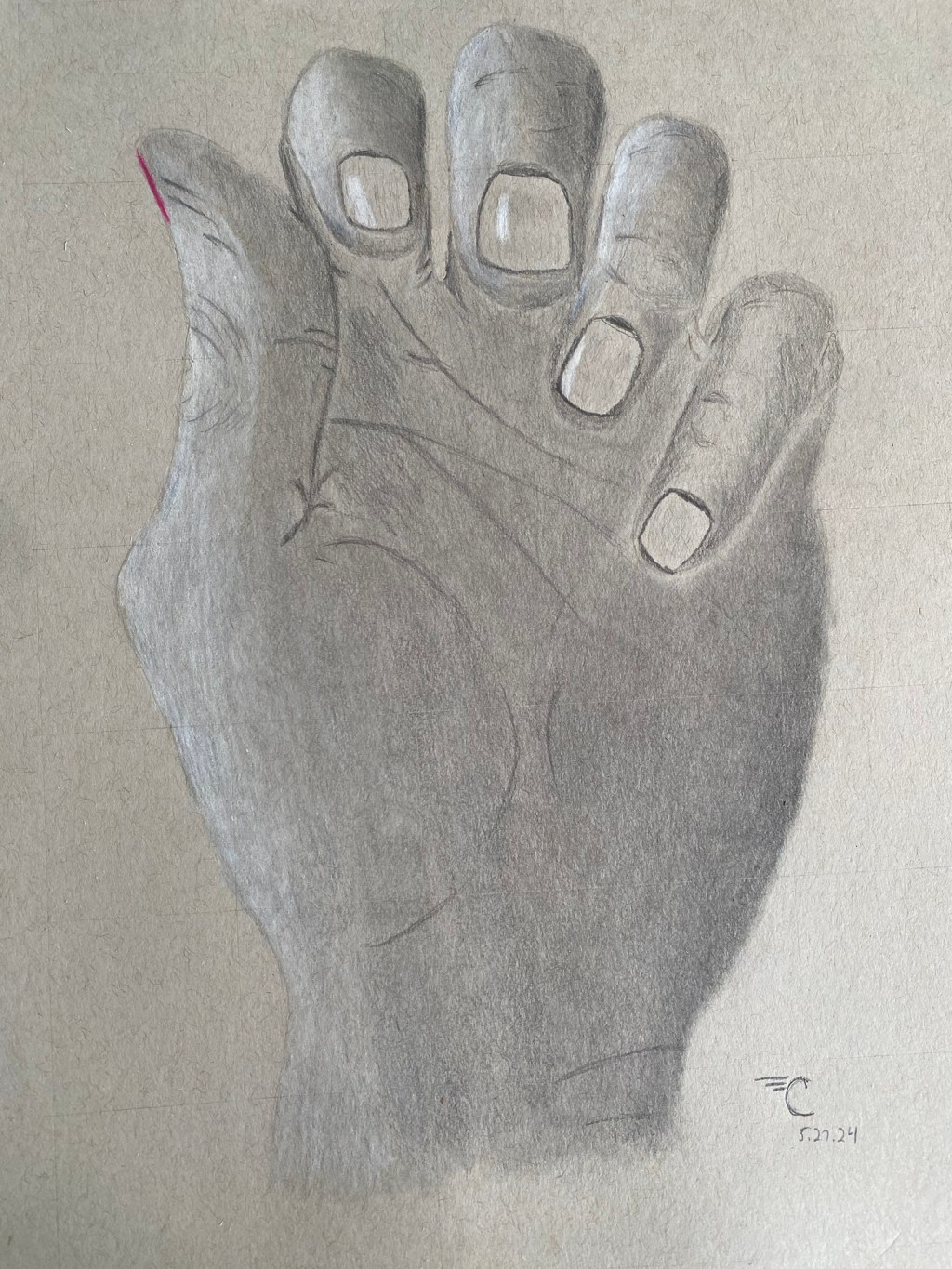
He paints his fingernails. My instant gut reaction when I first heard that was – and? Who cares? He’s a wealthy and famous young Gen-Z man who lives in L.A. Why are we surprised by this, and so what? At the same time, I wasn’t born yesterday; I can pretty easily derive the likely, probably stupid and even more probably unfounded conclusions that the social media meme culture will jump to with this information. Still, I was surprised that some professional NFL talent evaluators were making similar leaps, drawing broad conclusions about the player’s character, like Caleb won’t fit in an NFL locker room, Caleb can’t be a leader of men, he’s soft, he’s a diva, he can’t handle adversity, he’ll fold under pressure, and on and on and on. Really? All of this was being said about a Heisman Trophy winner who was widely acknowledged as the best player in college football over multiple seasons. Something didn’t add up here.
I thought that I must be missing something. But, the more I heard and read, it seemed that I wasn’t. It seemed that Occam’s Razor applied here – most obvious solution I could see was probably the correct one. These evaluators were questioning Williams because painted nails and public displays of emotion don’t fit the traditional mold of the great NFL quarterback, and perhaps traditional conventions of masculinity, in a larger sense. To me, the most fascinating part of this is that these conclusions were being drawn in spite of a mountain of objective evidence to the contrary: the kid had been a standout football player for an extended time at probably the most difficult position in sports. And yet, all these so-called *experts* could focus on was his painted nails. All the while, I never heard one of them articulate how painted nails equated to the character flaws that they were suggesting, i.e. a lack of courage, a lack of leadership ability, or an inability to deal with adversity. Probably because they couldn’t, if I had to guess. How interesting.
Whether or not Caleb Williams becomes a great or even good NFL player remains to be seen, but I doubt that the color of his cuticles will have anything to do with it. I predict that if he plays well and stays out of trouble, his nail-painting will be quickly dismissed by fans, coaches, and media alike. Personally, I really don’t care all that much if he paints his nails. And, quite frankly, I’m good with him crying with his mom in the stands; there is no shame in a healthy and appropriate display of emotion. The point of this, for me, is perhaps a cautionary tale on how our unconscious biases can shade our thinking, even when objective information tells us otherwise. I think that is without a doubt at play with Williams – there exists an established narrative of what a great NFL quarterback looks like, and painted fingernails and public crying don’t fit into it, therefore there must be a deficiency with the player. I disagree. And, apparently, the Chicago Bears also disagreed, selecting him first in the draft. I say stop worrying about his nails, and let’s see what he does on the field.
AB27
 Afterburnings