
Whether I’m at home or on an airline trip, my mornings generally begin the same way: with morning coffee, a little quiet time, and a little reading. Over the years, I’ve felt a little misunderstood at times over my morning proclivities; it has been (ahem) suggested to me that I’m grumpy/slow to wake up/not a morning person. The reality, though, is quite the opposite. I like getting up early, and there are few things I like better than sitting with a hot mug of coffee before the noise of the day sets in. Even on days when I have to work very early in the morning, I’ll still get up with enough time to sit for at least a few minutes before I have to get moving. I suppose where I’m a bit different from the stereotypical “morning person” is that I am typically pretty quiet first thing in the morning. Nothing wrong with that, right?
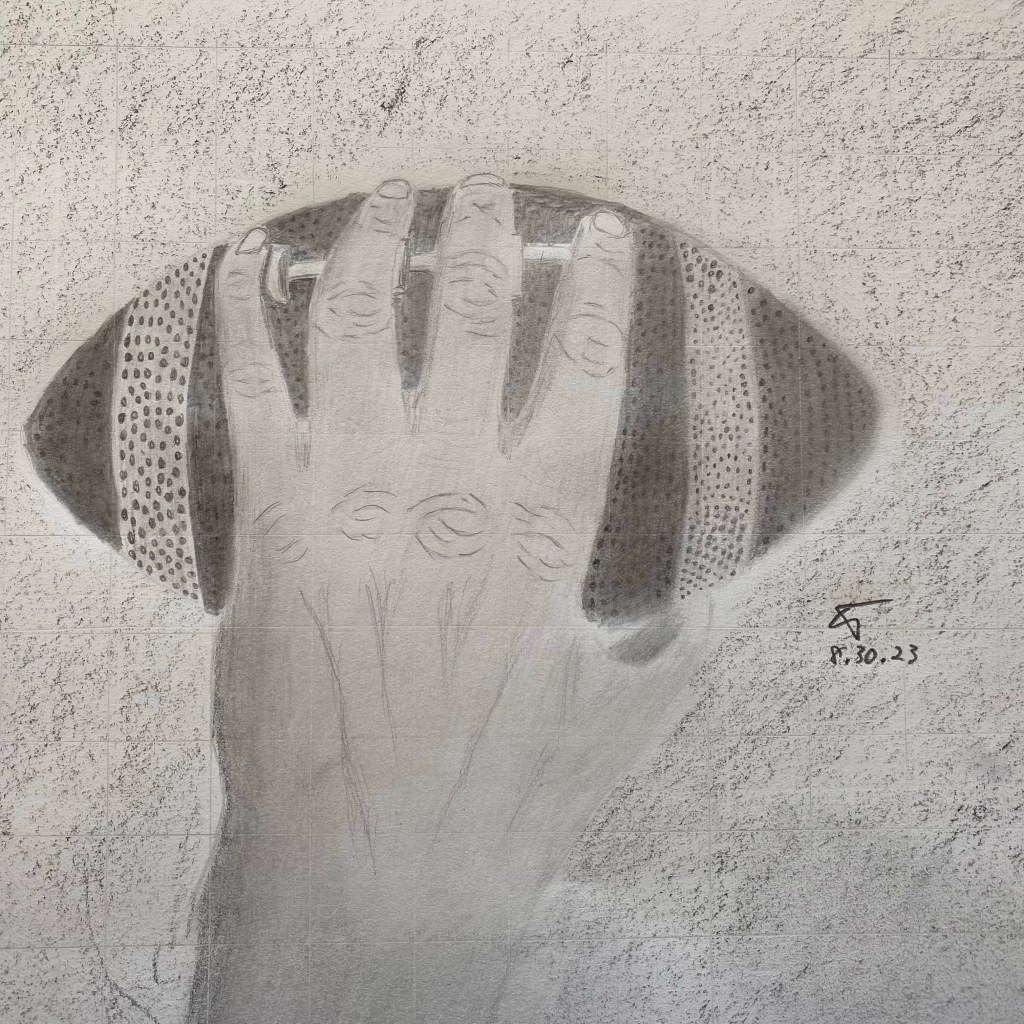
My morning reading generally begins with something theological or philosophical, and then I’ll move on to a survey of the news and sports that I follow. In the past couple of weeks, there have been a couple of sporting events of national significance happening close to home here in Wisconsin, namely, the CrossFit Games in Madison and the start of NFL training camp in Green Bay, signifying the beginning of the football season. Now, I don’t really follow the CrossFit Games all that closely, but I do attend a CrossFit gym, so the games are naturally a big topic of discussion there while they are going on, and there are often highlights playing on the gym TVs. NFL football, on the other hand, is probably my favorite professional sport and is one I follow a bit more closely.
Looking over the sports news one morning, it occurred to me that all of the athletes on NFL teams and in the CrossFit Games have something in common: they are all genetic outliers in terms of athletic potential. The speed, power and coordination that these people possess is not something that 99% of the population has, no matter how hard one might work. Of course, it also goes without saying that these athletes are extremely hard workers, and have spent countless hours and months and years mastering their craft. Right about now is where someone in the crowd might suggest that their capabilities are influenced by performance-enhancing drugs, and perhaps that is true. Even if that is the case, though, the point stands that these people are the genetic exception rather than the rule.
My first in-person exposure to this sort of elite athleticism that I can remember came in Platteville, Wisconsin, when I was a young boy. My parents took me and my siblings to a Family Day at the Chicago Bears training camp, back when they held it at UW-Platteville. I can still remember being amazed at the size, power and speed of those football players; I had never seen anything like it. Of course, that team was also full of fun characters like Jim McMahon, “Refrigerator” Perry, and the late, great Walter Payton, so it was a lot of fun for me to see those guys in person.
Fast-forward a few decades, and I still enjoy and appreciate watching elite athletes doing their thing. However, what does that say for the rest of us? When I, as a middle-aged and athletically very average human, look back on my forays into sports, my story is a lot more commonplace than that of the pros. I played several sports through high school, but I wasn’t particularly good at any of them. So, I moved on with life and found other ways to stay active. Nothing unusual about that.
These days, my kids are getting to the age where they are getting involved in sports and different sorts of team activities. I could be wrong, but it seems unlikely that any of them will become elite athletes either. So, what do I tell them? That it’s a waste of time? That if they can’t be great, then why bother? I don’t think so. While I have a little normal concern about injuries and such, I’m very much in favor of the kids trying different sports and activities. I think it’s beneficial for them to learn how to function as part of a team, physical movement is of course important, and there’s one other lesson of team sports that I think is critically important: I want them to learn how to lose.
How did I arrive at this as a desired outcome for my kids? Well, you can start by considering the data; how many kids who play sports are going to be good enough to get scholarships or become professionals? Not very many, right? With that in mind, though, there is still a lot to be gained from team sports. Physical fitness, teamwork, contributing a part to a bigger whole, respecting the position and authority of coaches, officials, and other players, learning how to operate within a set of rules, and persisting through challenging circumstances, among other benefits. Finally, team sports can help build courage and resilience, which is where the losing part comes in. I want my kids to be able to get up when life knocks them down. When they don’t get the job, or into “that” college, or their girlfriend breaks up with them, or they fail an exam, or when it just seems like things aren’t going their way. In the context of sports, having to run out on the field and play hard while getting their butts kicked can only help to cultivate these qualities that they need for life.
Funny enough, we were able to put this idea to the test recently. I was watching my son play in a weekend baseball tournament a couple of weeks ago, and his team got beat in the first game – badly. Then they got whooped again in the second game. As you might expect, the mood in the dugout among the team of 10-year old boys was not so good at this point. So, with one game remaining, I had a quick conversation with my son, and reminded him that no matter what the score of the game was, I wanted him to work hard, be a good teammate, and have a good attitude. To his credit, he responded pretty well. He ran back out on to the field with a renewed attitude, and kept it up through the last game, which they also lost. He had a nice game, with a couple of hits and a run scored, but his attitude and sportsmanship made me a lot prouder than the hits and runs he scored that day.
Was I happy that my son’s team lost three games that day? Of course not. It’s good to win and be successful, and to know what that feels like. But, there are times in life when we lose. My son might not grow up to be professional baseball player, but he will grow up to be an independent adult who needs to navigate the ups and downs of life. A decade from now, he probably won’t remember much about the day his baseball team lost three games on the same day, or the talk that we had about it. But I will. I’ll proudly remember the way he handled himself, and I will hopefully remember that small lesson in persistence as a building block towards the man of courage and resilience I know he can become.
AB12.
 Afterburnings