
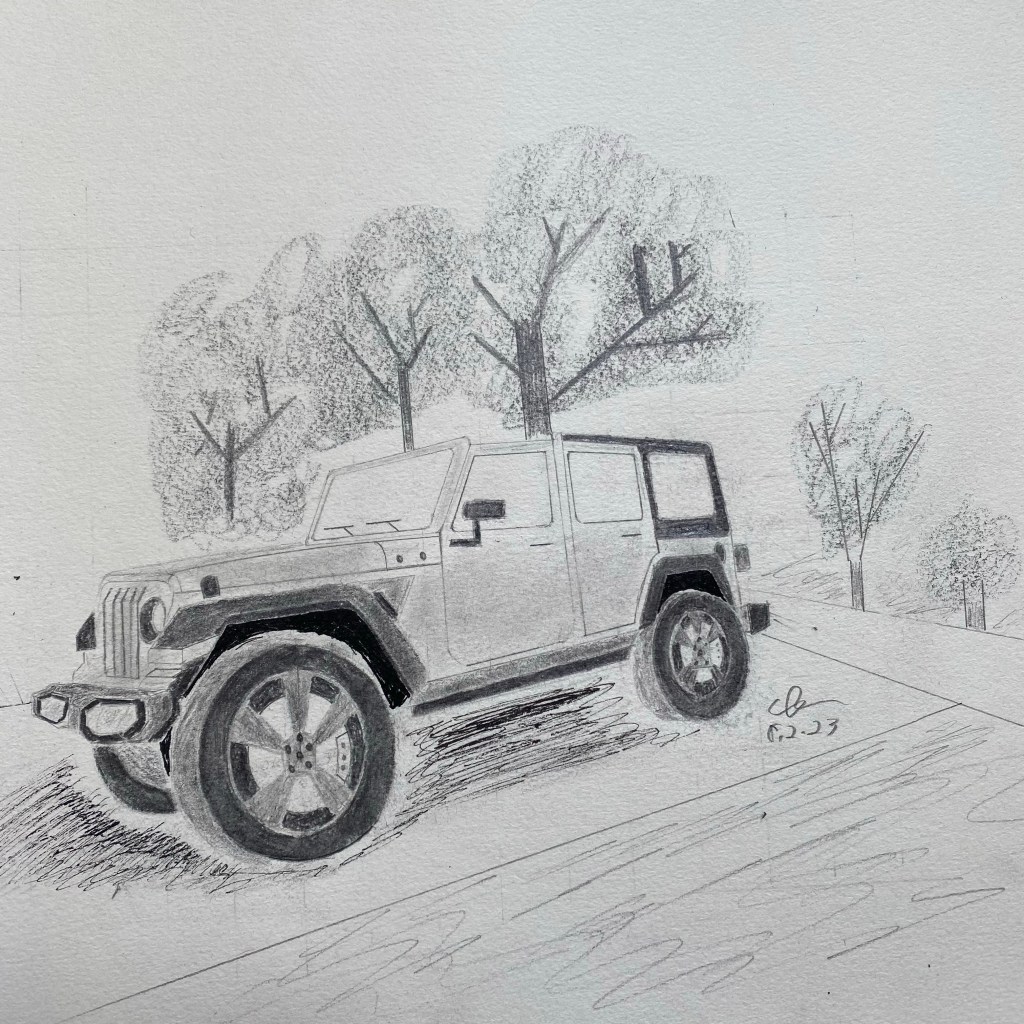
Continuing with the automotive theme of the last couple of weeks, it occurred to me that something of an anachronism exists within our house. Anachronism is kind of a fun word to say. Anachronism. Anachronism. Anachronism. Ok, I’m finished…if I remember correctly from studying Koine Greek about a million years ago, anachronism is derived from the Greek anakronismos, which is roughly translated as “towards another time.” From this, we get our English meaning for anachronism, which is something that belongs to a chronological period other than where it exists. We usually find this in context referring to something that is old-fashioned or out of time.
Now we have our English review out of the way. Great. Back to the topic at hand. I’ve found that an interesting nuance of working as an airline pilot is that one can live pretty much anywhere. This is because we are able to hitch a ride in the cockpit jumpseat of our own or other airlines to get to work if necessary. As an example, when I began working for my airline, I had to commute from my home in the Midwest to New York for my trips. It was a bit of a hassle, but that’s the way it goes sometimes in a seniority-based industry. As a result, pilots often talk with each other about how they get to work. Planes, trains, cars, boats, buses – we use all kinds of transportation modes to get to and from work.
Chatting with a colleague the other day about commuting, I learned that he drives to work, like I do. Where the conversation got my attention, though, was when he told me that he drives an electric car (a Tesla) that drives itself on the highway. He explained that he really likes the feature, because it gives him the opportunity to relax a bit more on his drive than he would be able to in a more conventional car that he would have to drive himself. A quick internet search later on revealed that the same car was capable of parking itself, and doing other automated driving tasks, with yet more automated driving tasks under development. As someone who logs a lot of highway miles every month, I could understand why my friend would feel the way he does about automated driving, but I also wondered, in a larger sense, of what the implications were of people ceding seemingly ever-more control of their everyday lives to various forms of automation. This is, of course, a really big topic that affects most of us in many ways.
If you were to walk out to our garage, you would find two vehicles; one car and one SUV. They are both nice, later-model vehicles, but they are not necessarily anything special or unusual. A look inside, however, reveals a feature that is becoming an anachronism in modern times – they are both equipped with manual transmissions. We chose manual transmissions for our cars intentionally, because we enjoy the driving experience that comes with having them. To be fair, these cars do both have a significant level of automated technology not found on older cars, like anti-lock brakes, traction control, and cruise control, as well as other helpful features like backup cameras. So, it’s not like I am anti-tech; I am all for innovations that make us and our cars safer and more efficient. So, what is it about the idea of automated cars that bugged me a little bit as my colleague was telling me about it? I think it has, frankly, little to do with the car, and more to do with the human inside the car.
Car technology seems to be following airplane technology in the sense that aircraft and cars are constantly becoming more automated, with automation generally touted as a means to achieve greater safety and efficiency. In my job, we spend a lot of training time learning to understand, manipulate and manage the many automated systems that the airplane has. For the most part, these systems are good and helpful additions to the cockpit. There is much to learn about them, and I’ve realized that flying with these systems requires quite a different skill set than the older and more manual aircraft that I flew earlier in my career, even if the basics of flying the airplane remain the same. The biggest potential hazard, in my opinion, happens when the automation fails or doesn’t work the way it is supposed to, which happens on occasion. Are we, as a pilot group, prepared to revert to more fundamental flying skills in that case? Or, are we becoming overly reliant on these systems? That answer, I think, varies from one pilot to another, but I find myself going out of my way to fly the airplane manually on a regular basis for just that reason – I may need those skills at any moment. And the skills I’m referring to are not just “stick and rudder” skills, but also the mental skills required for navigating, planning, manual calculations of time, distance, and fuel, and many other things that the flight computers normally do for us with the push of a button.
The same type of skill cultivation is what concerns me about self-driving cars. The way that our society operates now, we use our brains in very different ways than we did just 20 or 25 years ago. We have learned new skills to operate computers and mobile devices, but we don’t need to be able to read a map, or do a math calculation, or spell, or write anymore – our devices will do all of that for us. That is, unless we make the extra effort to practice those skills. The same applies to driving, in a way. Do I think it’s important to be able to drive a manual transmission, or parallel park with just a mirror, manually calculate gas mileage, or back a trailer? Probably not, for most people. However, I do think it’s important to develop the mental capacities that those tasks require – quick calculations, decision making, judgment of time and distance and angles, assessing spatial relationships, coordination of mind, body, and machine, and the like. Without practice, these skills will be lost, or never developed in the first place.
I don’t think that self-driving cars are bad. Perhaps they will lead to a safer future for us on our roads. I hope so. At the same time, I think it is worth asking ourselves the question: what is the automation that permeates our lives doing to our minds, and what, if anything, should we do about it? We cannot stop the march of technology, and I’m not sure that we should, even if we could. At the same time, it seems like a consequence is that we will have to go out of our way to find ways to develop mental agility and problem-solving skills that exist apart from the same technology. Perhaps I’ll head out for a drive with my anachronism-stick-shifting car and think about this a bit further. Who knows, maybe I’ll find a spot to parallel park it while I’m at it.
AB9
 Afterburnings