
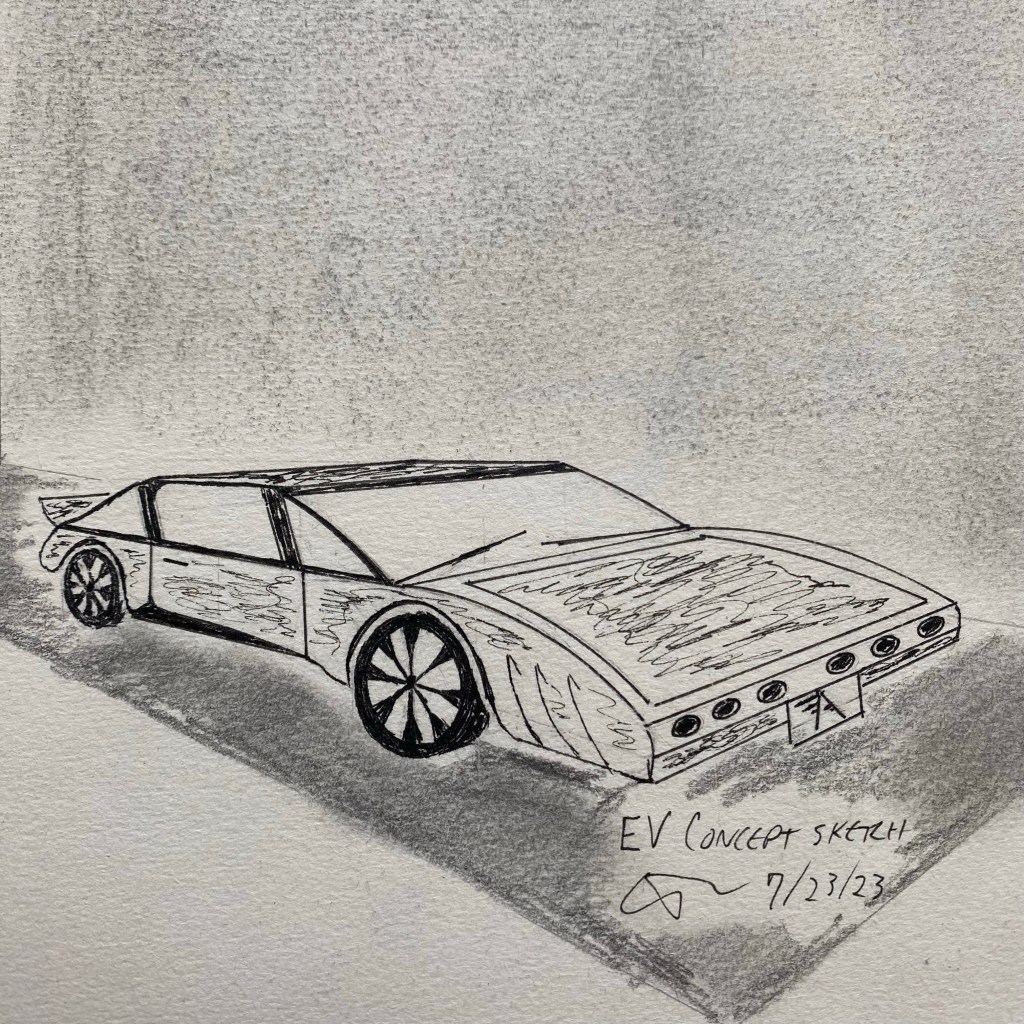
I have this spare electrical outlet in my garage. It’s in a weird spot and seems kind of useless, honestly. It’s sort of near the floor and in the middle of the wall, and I can’t really picture a good use for it. The previous owners of the home must have felt the same way, since they built a coat closet around it. I haven’t given it much thought, though, since the outlet isn’t in the way of anything. So, there it remains, unlikely to be used. Whatever.
Speaking of garage things, I enjoy reading about new technology and trends in the automotive industry. Along those lines, it’s well known that the most significant current trend in automotive technology is the movement towards electric and hybrid vehicles and away from cars and trucks with internal combustion engines. In an effort to push such a transition along, California recently passed legislation (link) requiring all new large-truck sales to be fueled by either hydrogen or electricity by 2036. This follows legislation requiring all new car and light-duty truck sales to be tailpipe emissions-free by 2035. Predictably, these pieces of legislation have been contentious. Those in support of the transition cite, among other concerns, the influence of diesel exhaust fumes in contributing to air pollution in California cities, some of which have among the worst air quality in the U.S., as well as the related medical benefits of cleaner air. Those opposed argue that the legislation is not realistic, citing the high cost and limited availability of electric cars and trucks, as well as logistical problems of inadequate range and insufficient charging infrastructure. Anyone who is familiar with debates around the viability of electric cars is likely familiar with these issues, since the same issues dominate the narratives on electric cars and light duty trucks in most places. A related concern is also the idea that widespread manufacture of electric cars is merely trading one type of pollution (tailpipe emissions) for another (toxic substances associated with batteries). Perhaps this is the case, but that will have to be a discussion for another day.
The rapid advancements and shifts in automotive technology are especially interesting when one considers that a just a century ago, the most advanced and best-selling car in the U.S. was the Ford Model-T, which was only about twenty years removed from the initial transition from horses and carts to machine-powered conveyances. We have come a long way in a short time since then, to say the least. What many might not know is that electric cars have been present the whole time. In fact, the first attempts at electric powered cars preceded internal combustion cars by as much as 50 years (!), with the first battery powered concept emerging around 1835 (source), compared to the first patent for a gas-powered car being granted in 1886 to Karl Benz. In spite of precedent, however, the electric engines have never worked as well or as long as their gas- and diesel-powered counterparts. So, here we are, around a century later, still trying to make them work, which leads to the question: will these electric cars finally work? And is it worth the effort?
In my opinion, the answer to those questions is nuanced. Yes, I believe that manufacturers like Ford, Rivian, and of course Tesla (among others) have shown that electric vehicles are viable, safe, reliable, capable of high performance, and are perfectly functional. Right now, though, I also believe that they remain a step backward in terms of pure functionality in comparison to their internal combustion counterparts, not to mention that they also remain a heck of a lot more expensive. At the same time, while not for everyone, the capabilities of electric cars that are on the market right now are perfectly suitable for many people who don’t go far or haul a lot, and I can appreciate the appeal of electric cars in the strategic realm (reduced dependance on oil) and in the environmental realm as well. In order for them to stick this time, though, I believe they need to get better and cheaper – quickly.
With all of that in mind, is this California legislation a good idea? Quite honestly, I think it’s hard to say at this point. Maybe it’s a pipe dream that the technology can advance enough to meet their goals in the next decade. Or maybe this sort of big idea is a necessary disruption to stimulate the investments and creative energy needed to make it happen. I am perhaps a little skeptical, but then, the old men on their horse carts were probably skeptical too, when early auto inventors were deploying their horseless carriages. We shall see.
Where then, do I fall on the question of electric cars? I am not opposed in principle to electric vehicles; their widespread adoption could certainly have strategic and environmental benefits. At the same time, prevailing concerns about cost, infrastructure, range, and work capacity are valid. For my personal needs today, electric cars are too expensive, lack the range and work capacity that I need, and are not adequately supported where I operate my vehicles. They simply aren’t good enough – yet. But the key word is “yet”. As with most emerging technology, it is likely that they will get better over time, and I am open to owning one when they become capable enough to meet my needs.
When one surveys automotive history, one sees rapid technological advancement, guided by visions of moving people and things farther, faster, more efficiently, and with greater work capacity. Put simply, to do more things better and faster. An interesting piece of this, however, is the gradual shift over time in priorities to include environmental impact, along with work capacity, speed and efficiency. To me, this is a good thing; we should strive for a healthy balance of productivity and function, while also being good stewards of our resources. To this end, I hope that electric cars continue to get better, and internal combustion cars too, for that matter. For now, the internal-combustion cars in my garage will remain, but I do have that spare electrical outlet waiting in the garage…just in case.
AB8
 Afterburnings